Custom Mailer Boxes: A Buyer’s Guide for E-Commerce & Subscription Brands
For an online brand, custom mailer boxes are the storefront, the greeter, and the first product photo your customer takes. E-commerce shops, subscription services, and DTC launches all lean on the same corrugated workhorse, yet specs that look interchangeable on a quote sheet behave very differently on a doorstep. Board grade, flute, print method, and size each move your cost and your unboxing moment, and quantity moves them most of all. This guide breaks down how to spec custom mailer boxes that protect the product, photograph well, and still leave margin in your shipping budget.
Board, Flute, and How Tough Is Tough Enough
Most mailers are E-flute corrugated: thin, rigid, crisp print surface, and folds cleanly into the familiar roll-end tuck-top. B-flute adds cushioning for heavier or fragile goods at the cost of a slightly softer print. For products under about 1 lb, a 32 ECT E-flute board is plenty; heavier items, candles, glassware, or multi-item subscription kits justify B-flute or a double-wall spec. Overbuilding wastes money on every unit, but underbuilding costs more, because one crushed corner in an unboxing video does damage a refund cannot fix.
Closure style matters too. The standard tuck-top needs no tape and reopens cleanly for returns, while a tear-strip plus adhesive strip combination speeds up your pack line and gives customers a resealable box for send-backs. If returns are a meaningful share of your volume, that dual-strip detail pays for itself in support tickets alone.
Print: Where Budget Meets Brand
Flexo printing (1–2 spot colors) is the budget route and suits logo-plus-pattern designs. Digital print delivers full color with no plates, ideal for runs under about 1,000 or for testing multiple designs. Offset litho-lamination gives the sharpest, most saturated result for photography-heavy artwork but carries setup costs that only make sense at volume. Printing the interior is the signature subscription-box move: it costs roughly 20–40% more than outside-only, and it is usually the single best upgrade for social sharing.
Finish choices ride on top of the print decision. Matte uncoated board is the current DTC default and hides scuffs from transit; gloss or soft-touch coatings deepen color but show handling marks and can complicate recycling claims. White exterior with kraft interior, or kraft outside with a full-color inside print, are the two combinations that deliver the most contrast per dollar. Whichever direction you take, ask for a printed sample on your actual board stock, because screen previews flatter every design.
Size: The Spec That Bills You Twice
Size errors are the expensive kind because you pay for them in board and then again in freight. Dimensional weight pricing means an inch of dead air in each box compounds across thousands of shipments. Measure your packed product with void fill, add 1/4–1/2 in clearance per side, and standardize on as few footprints as your catalog allows; every additional size is a separate die and a separate inventory line. If you ship internationally, check that your chosen footprint nests efficiently on a pallet, since cube utilization quietly decides your inbound freight bill too.
Common footprints to start from
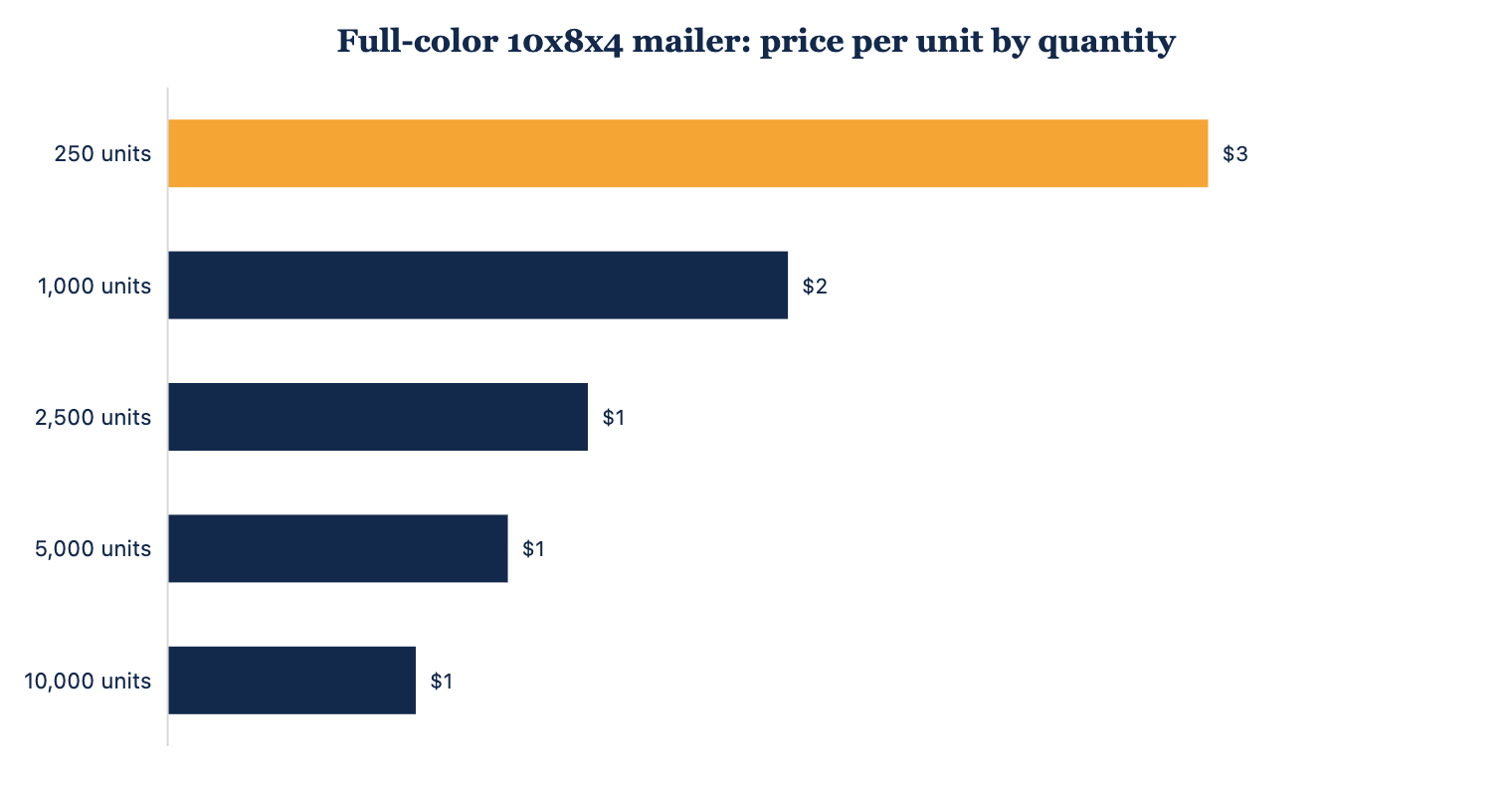
A 9x6x3 in handles accessories and small apparel; 10x8x4 in fits most subscription kits; 12x9x4 in covers multi-item orders. Starting from a stock die and customizing print only is the fastest way to launch, then cut a custom die once volume proves the need.
Inserts, Void Fill, and the Rest of the System
The box rarely travels alone. Die-cut corrugated or molded pulp inserts hold products still and lift presentation, printed tissue and a sticker cost cents and finish the reveal, and a thank-you or discount card is the cheapest retention tool in e-commerce. Spec these alongside the box, not after it, because insert dielines depend on the interior dimensions you lock today. Crinkle paper is the forgiving default for irregular products; custom inserts pay off once a single SKU dominates your volume. Whatever you choose, weigh the full packed unit, since void fill and inserts can push a shipment into the next billable weight band and quietly erase the savings from a cheaper box.
| Order size | Best print route | Typical unit cost (10x8x4) | Lead time |
|---|---|---|---|
| 100–500 | Digital | $2.10–$3.50 | 2 weeks |
| 500–2,500 | Digital or flexo | $1.20–$2.10 | 2–3 weeks |
| 2,500–10,000 | Flexo | $0.75–$1.20 | 3–4 weeks |
| 10,000+ | Litho-lam / flexo | $0.45–$0.75 | 4–5 weeks |
Timeline: Plan Backwards From Your Launch
The chart below lays out a realistic production sequence. The step buyers underestimate is the proof stage: a printed physical sample adds about a week but is the only reliable check on color, board feel, and how your artwork wraps the corners. Subscription brands should hold a one-month buffer of boxes at all times, because a delayed box run, unlike a delayed product, stops every shipment at once.
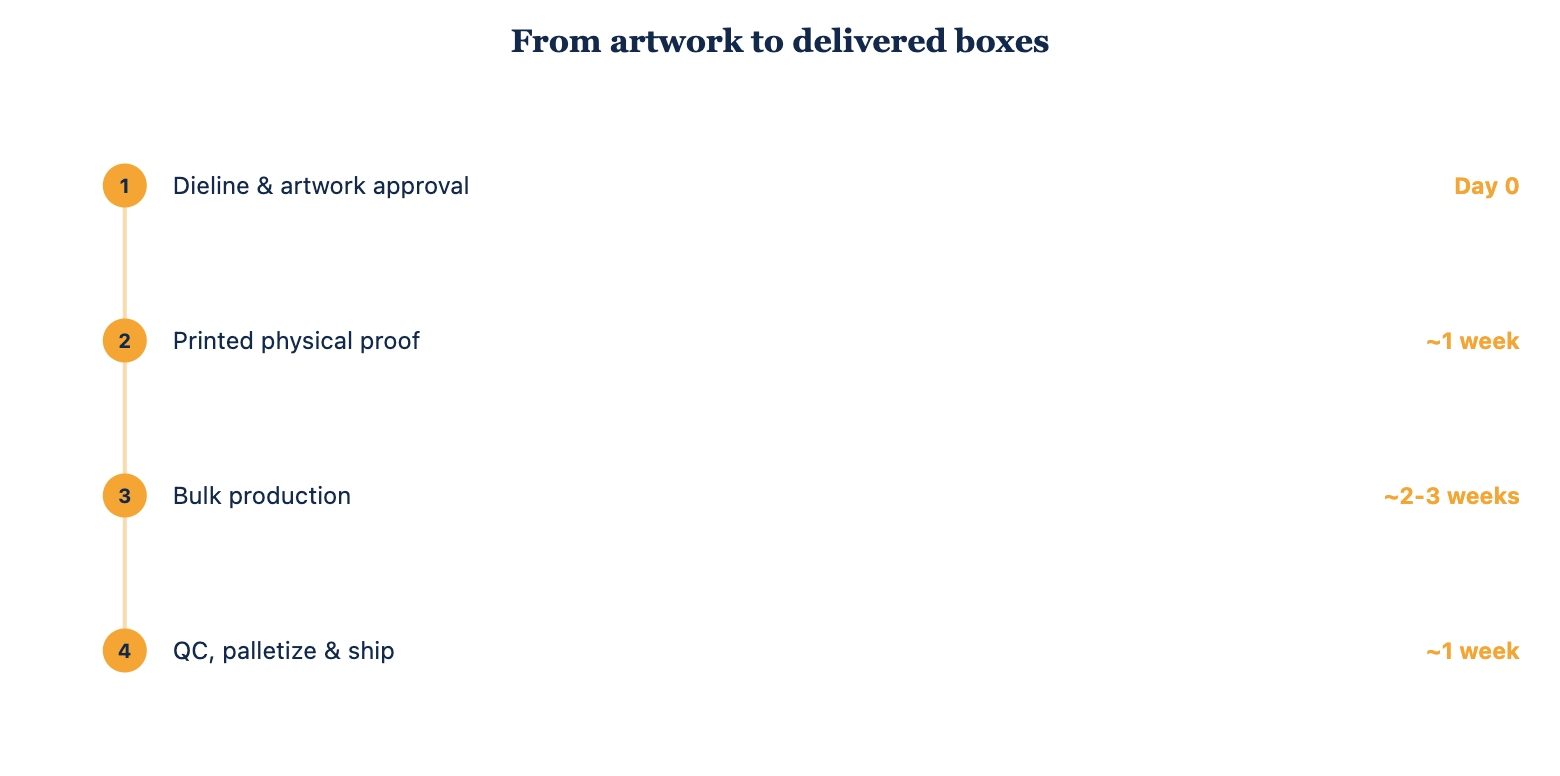
Once the first run lands, set a reorder trigger rather than a reorder date: when stock hits six weeks of cover at your current shipping rate, the next run starts. Volumes shift with promotions and seasonality, and a trigger tied to actual consumption absorbs both. Repeat runs also skip plate and die setup, so lead times shorten by roughly a week and unit prices settle slightly below the first order.
Sustainability Sells, and It Is Basically Free Here
Corrugated board is among the most recycled materials on earth, typically 70–90% recycled content already. Say so. A one-line recycled-content note and a curbside-recyclable mark printed inside the lid costs nothing and answers the question your customers are already asking. Water-based inks and unlaminated finishes keep the box fully recyclable; if you add a gloss film for photography-grade color, know you are trading some of that story away.
The Bottom Line
Spec the lightest board that survives your carrier, choose print by run size rather than habit, standardize footprints ruthlessly, and keep a box buffer ahead of demand. Custom mailer boxes reward brands that treat them as a system, not a one-off design project, and the payoff shows up twice: on the freight invoice and in the customer photos that sell the next order.
Launching or reordering soon?
Send us your product dimensions, monthly volume, and artwork stage, and we will spec board, print, and pricing for your exact run.
Home · About · See box styles on our homepage or learn how we print custom mailer boxes.
Leave a Reply